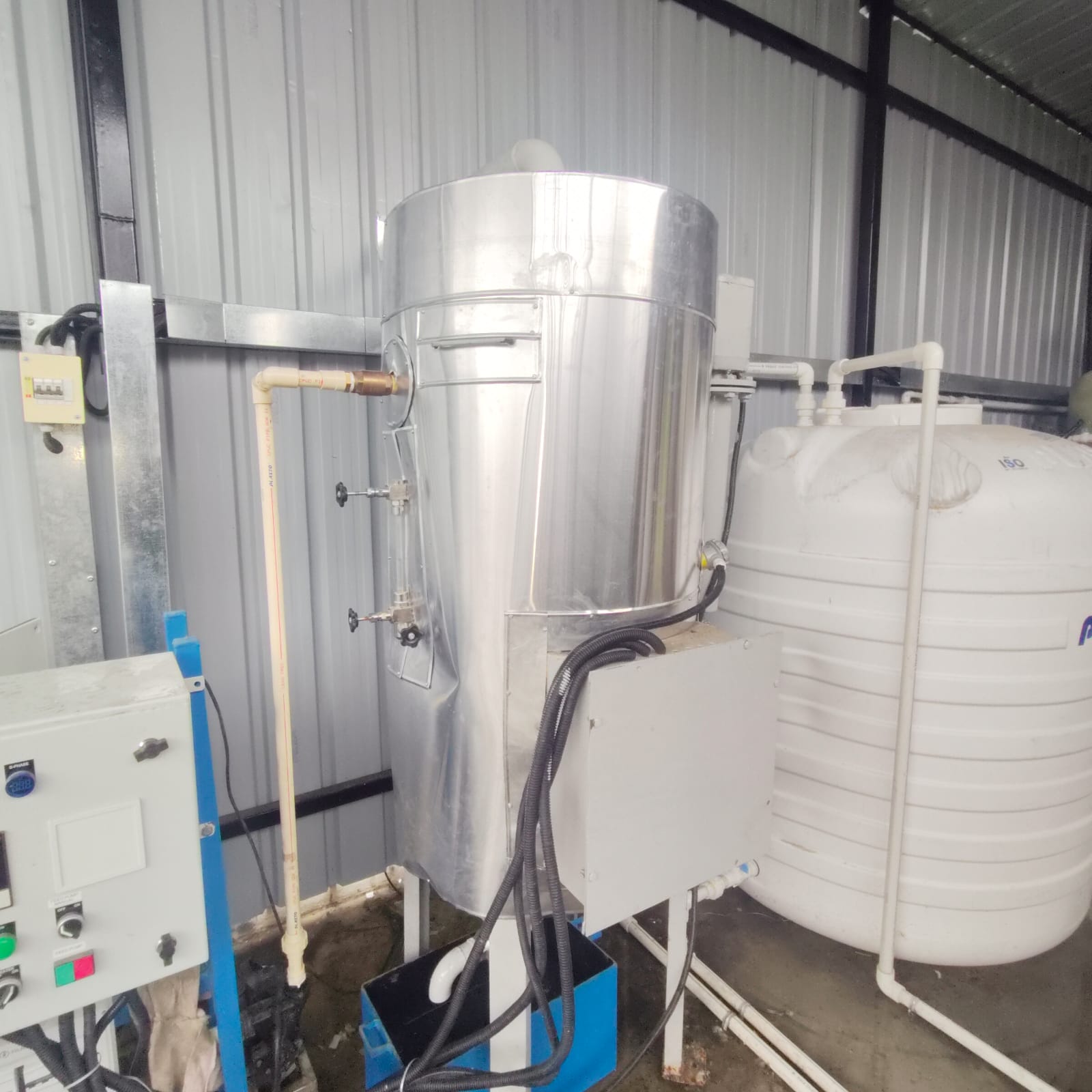
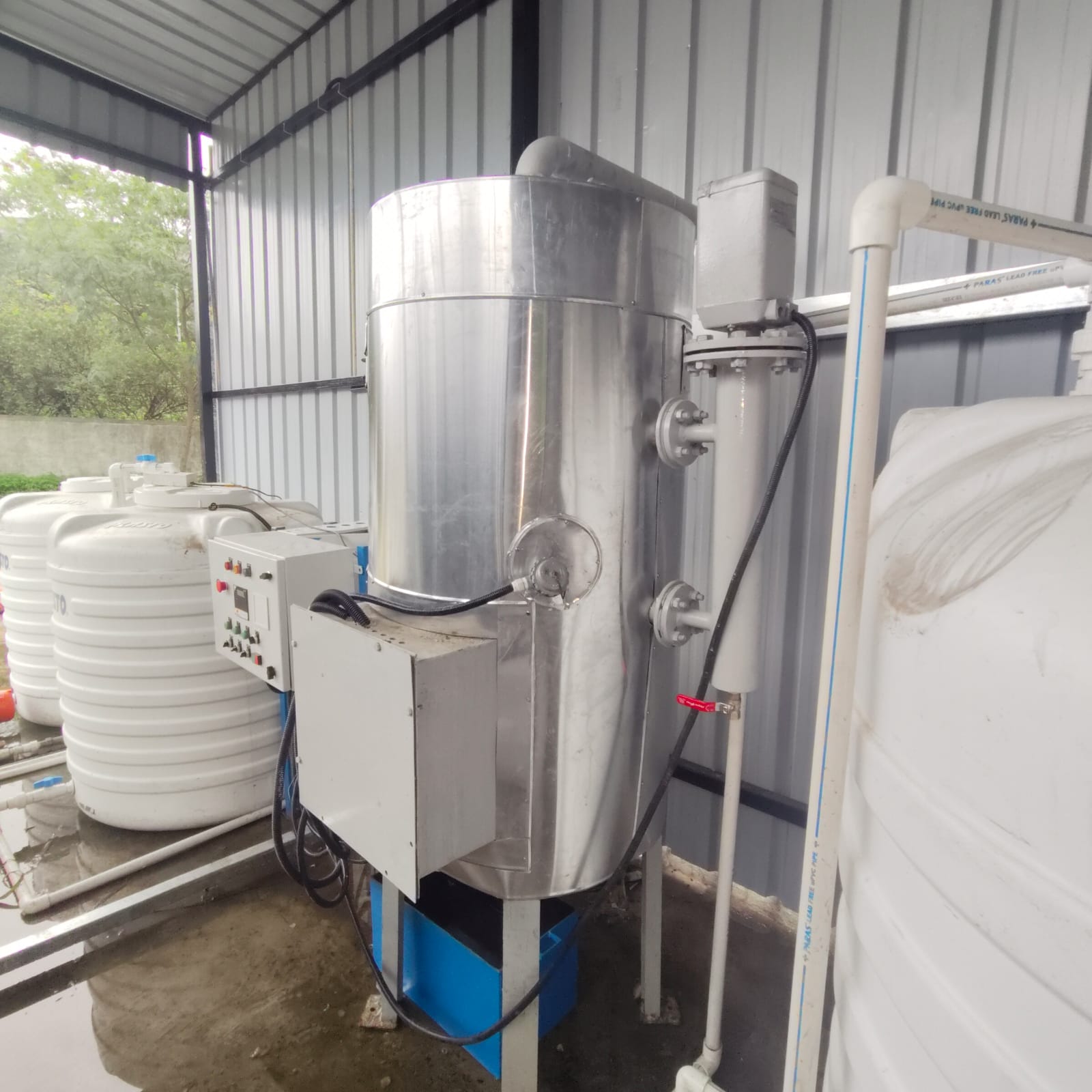
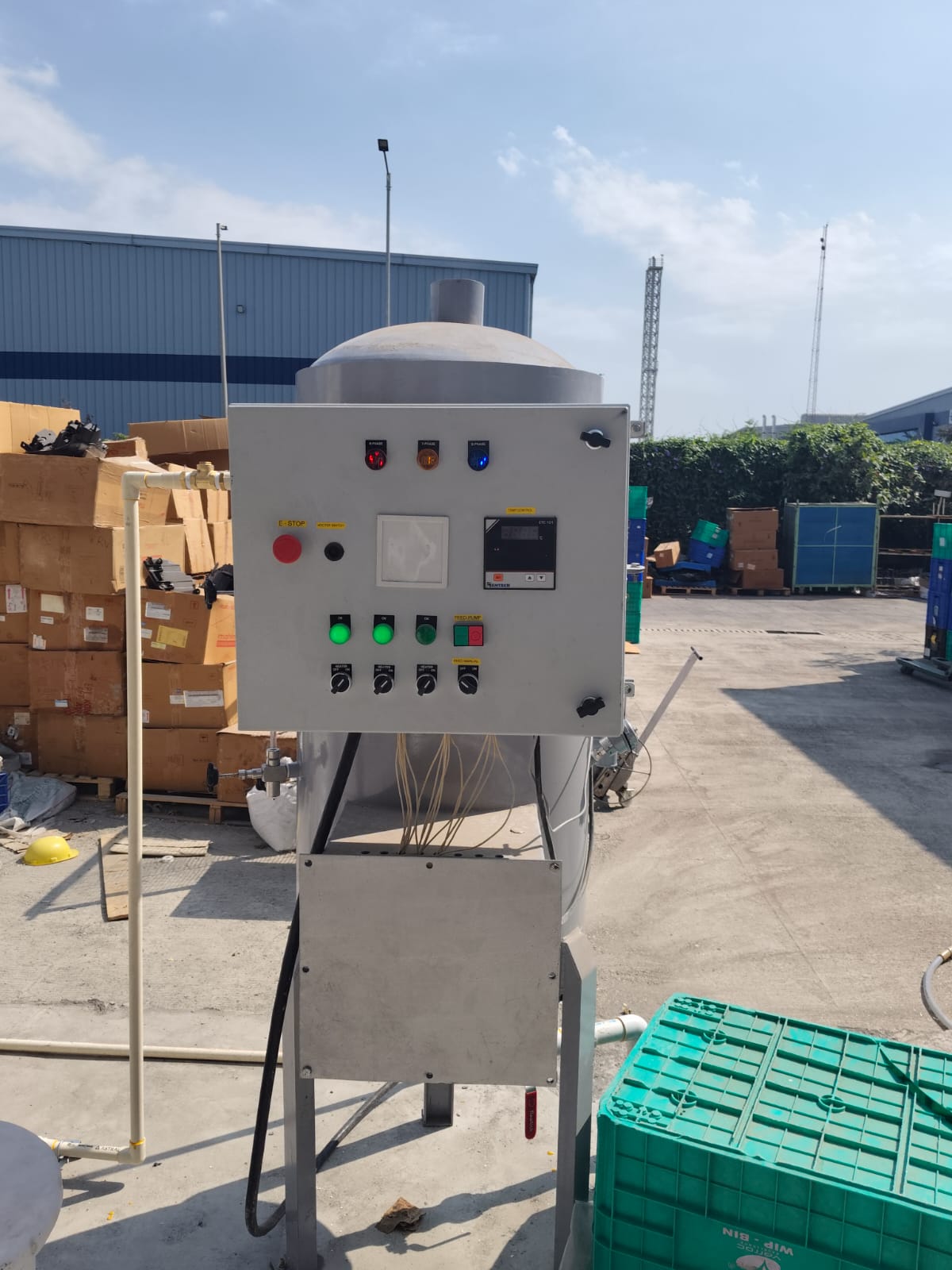
electric evaporator
Techno Aid Inc designs and commissions end-to-end electric evaporator systems that ensure no liquid effluent is discharged from the industrial premises. ZLD systems combine advanced wastewater treatment with concentration and evaporation technologies to recover maximum water while converting residual waste into dry solids or salt cake for safe disposal.
Our ZLD solutions are designed for textile, pharmaceutical, chemical, distillery, and paper industries facing stringent MPCB/CPCB zero-discharge mandates. We provide comprehensive solutions including effluent pre-treatment, high-efficiency RO concentration, Multiple Effect Evaporation (MEE), and Agitated Thin Film Dryer (ATFD) for final solidification.
Key Features & Benefits
- Pre-treatment ETP → RO Concentration → MEE → ATFD process chain
- Multiple Effect Evaporator (MEE) for energy-efficient concentration
- Agitated Thin Film Dryer (ATFD) or Spray Dryer for final drying
- Crystallizer for salt recovery and reuse
- 99%+ water recovery with zero effluent discharge
- Designed to comply with MPCB / CPCB zero-discharge mandates
- Suitable for textile, pharmaceutical, chemical, and distillery industries
- Reduces freshwater consumption and regulatory risk significantly
Technical Specifications
| Parameter | Specification |
|---|---|
| System | Zero Liquid Discharge (ZLD) Plant |
| Process Chain | ETP → RO → MEE → ATFD/Crystallizer |
| Water Recovery | 95 – 99% |
| Effluent Discharge | Zero (0 KLD) |
| Feed TDS Range | Up to 1,50,000 ppm |
| Concentration Technology | Multiple Effect Evaporation (MEE) |
| Drying Technology | ATFD (Agitated Thin Film Dryer) / Spray Dryer |
| Final Solid | Dry salt cake / crystalline solids |
| Compliance | MPCB / CPCB Zero Discharge Mandate |
| Industries | Textile, Pharma, Chemical, Distillery, Paper |
Industries & Applications
How It Works
Industrial wastewater first undergoes primary and secondary ETP treatment to remove organic load, colour, and suspended solids. The treated effluent is concentrated using high-recovery RO systems, recovering 70–80% of water. The concentrated reject (brine) is fed to the Multiple Effect Evaporator (MEE), where steam-driven evaporation removes more water across multiple effects, concentrating TDS to over 1,00,000 ppm. The thick slurry from MEE enters the Agitated Thin Film Dryer (ATFD) or crystallizer, where remaining moisture is evaporated to produce dry solid waste — salt cake or a crystalline product. Recovered water from MEE and ATFD condensate is recycled back to the process.