
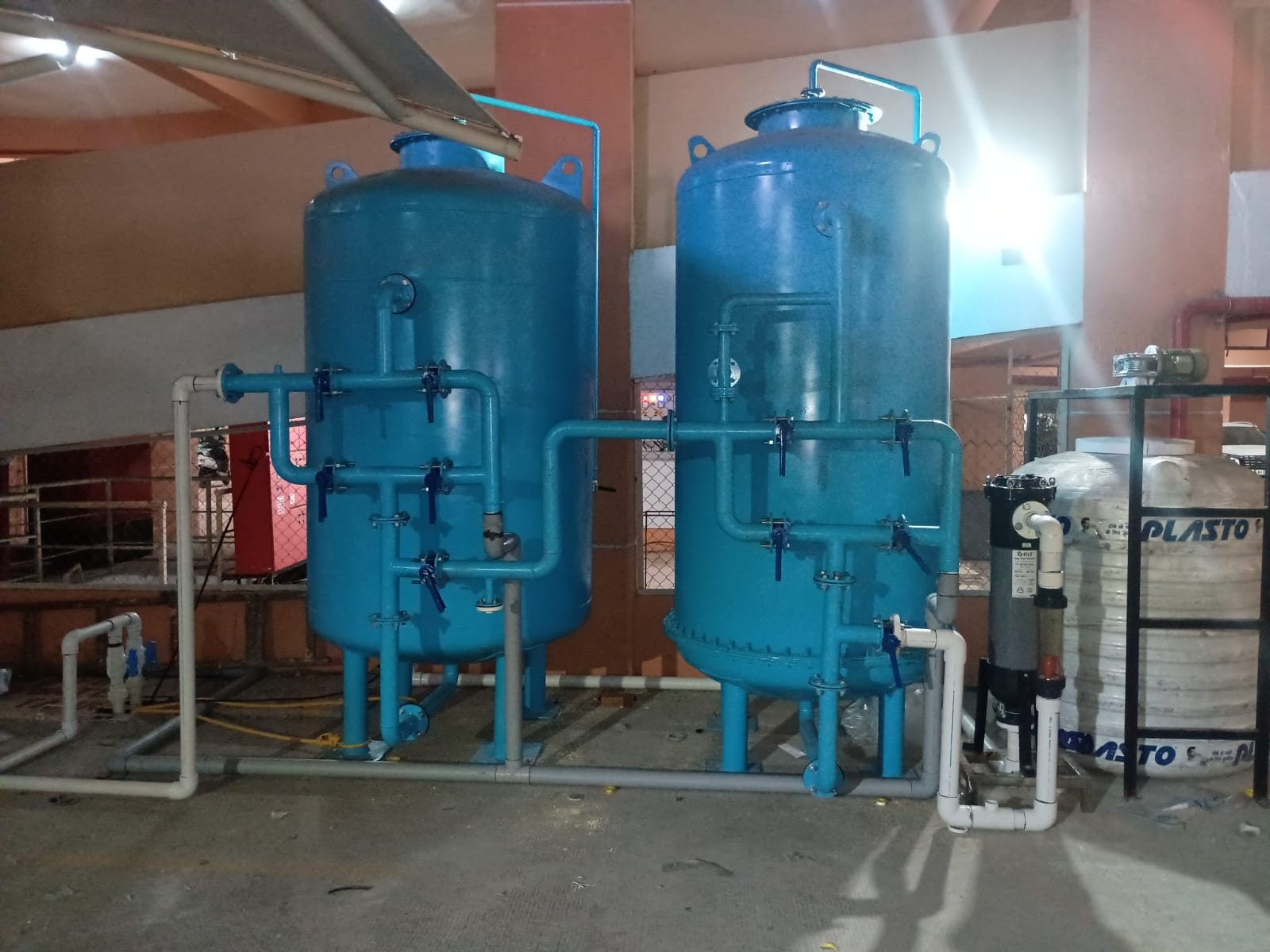
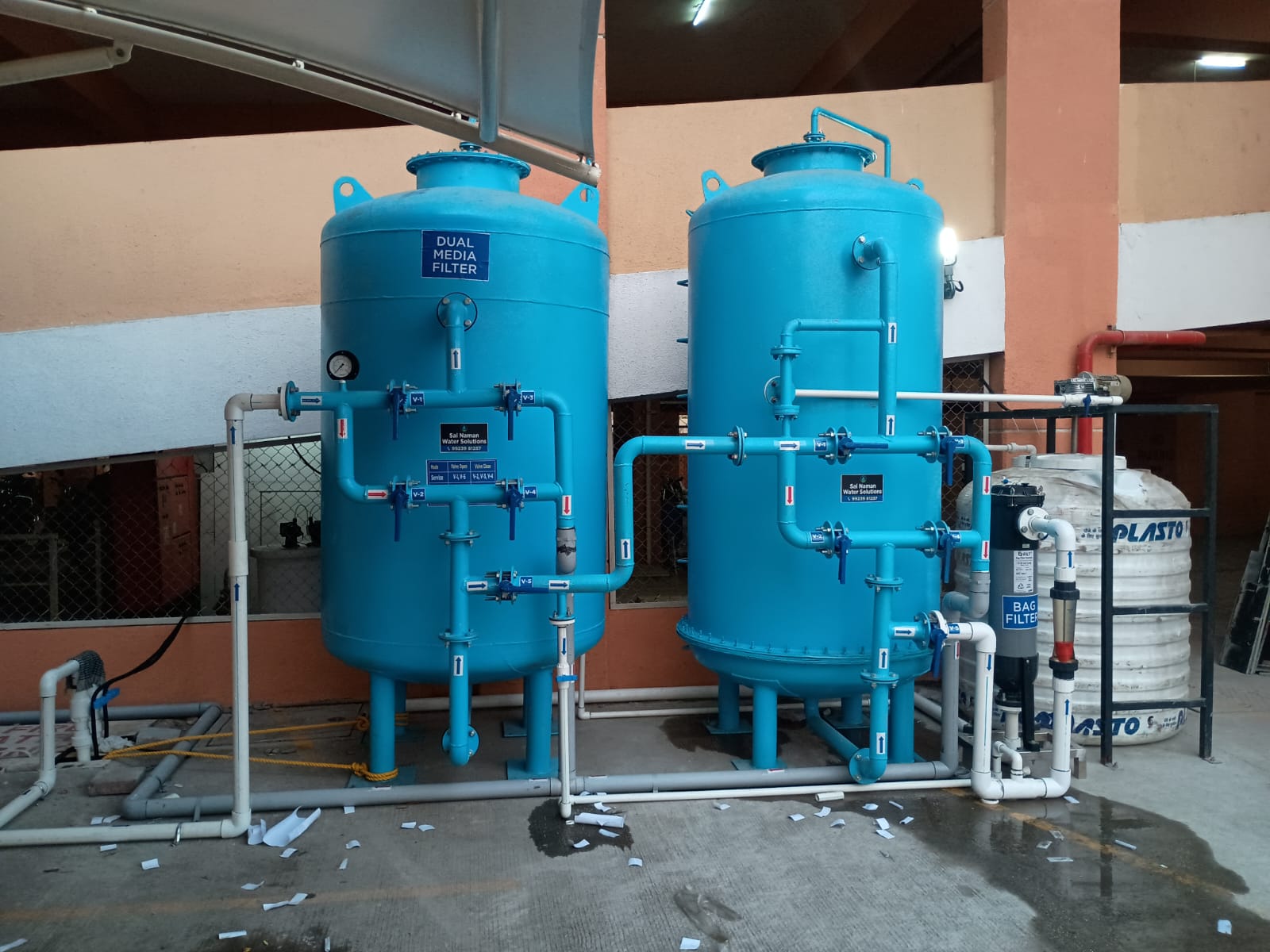
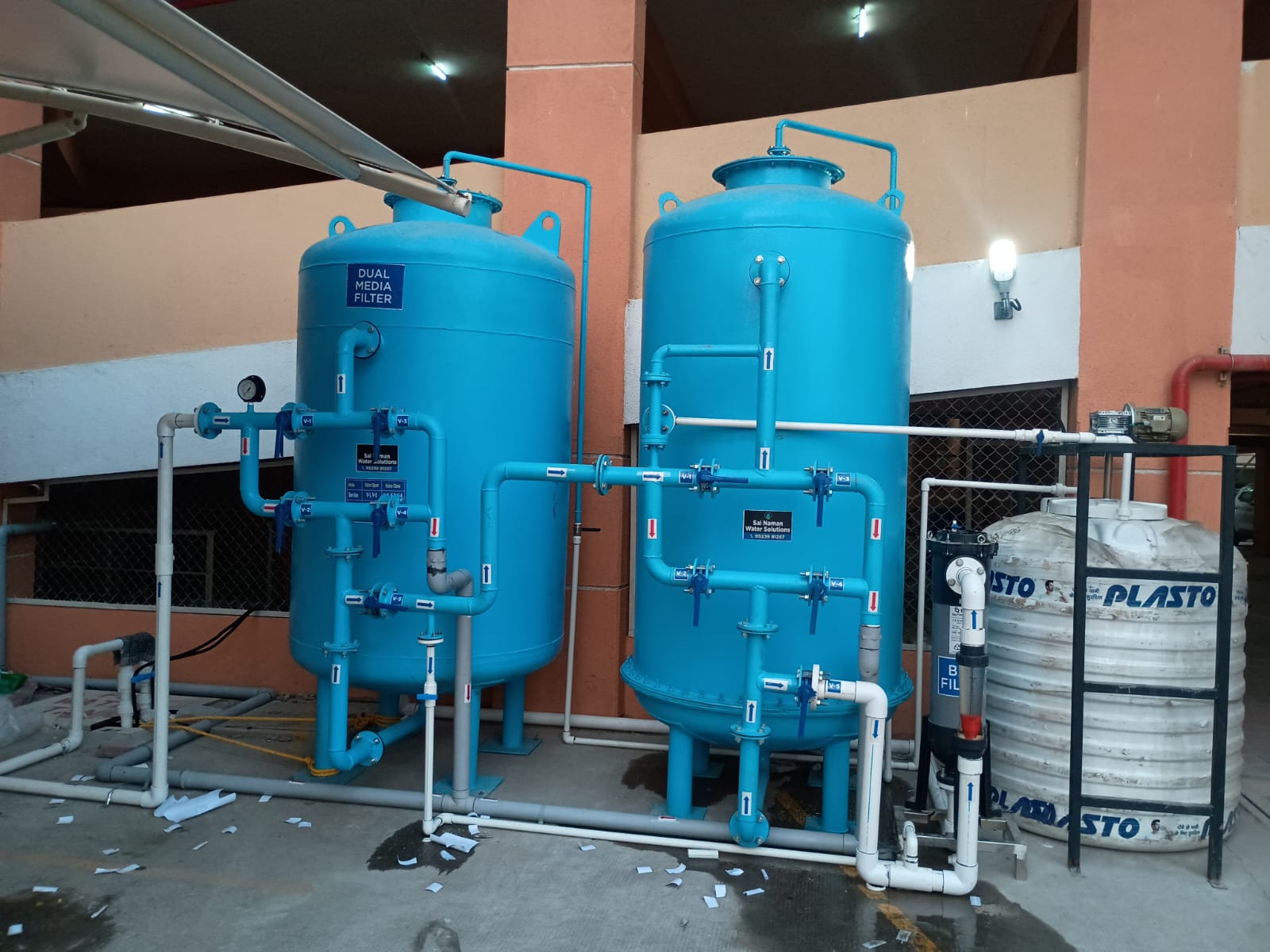
Water Softener / Ion Exchange Systems
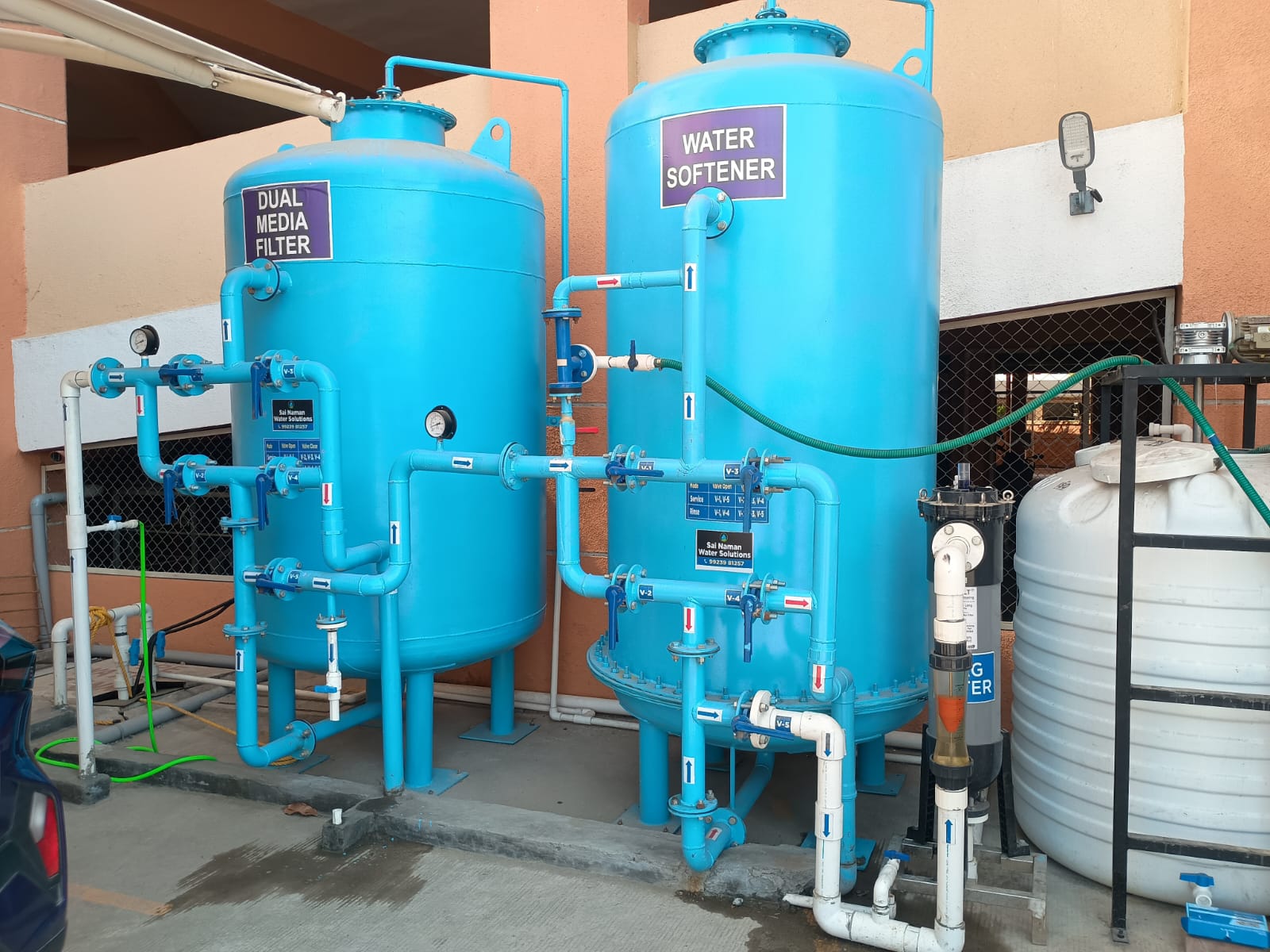
Techno Aid Inc supplies cation resin-based water softeners that remove calcium and magnesium hardness from water through sodium ion exchange. Soft water protects boilers, cooling towers, heat exchangers, and process equipment from scale formation, increasing equipment life and reducing energy consumption.
Our softeners are available in single-vessel (manual or auto-regeneration), duplex (continuous supply), and multi-vessel configurations. Automatic systems use timer-based or volume-based regeneration with common salt (NaCl) brine. We manufacture systems in FRP, MS (epoxy-lined), and SS vessels from 100 LPH to 100 KLH capacity.
Key Features & Benefits
- Strong acid cation (Na-form) resin with high exchange capacity
- FRP and MS (epoxy-lined) pressure vessels
- Automatic multi-port valve or manual valve options
- Duplex softeners for 24×7 uninterrupted soft water supply
- Brine tank with injector for economical NaCl regeneration
- Timer-based or volume-based automatic regeneration
- Boiler protection: prevents scale and increases thermal efficiency
- Applications: boilers, cooling towers, laundries, food processing
Technical Specifications
| Parameter | Specification |
|---|---|
| Type | Ion Exchange Water Softener (Na-Cation) |
| Resin | Strong Acid Cation (SAC) – Sodium form |
| Feed Hardness | Up to 600 ppm (as CaCO₃) |
| Product Hardness | < 5 ppm (as CaCO₃) |
| Regenerant | NaCl (common salt) – 10% brine |
| Vessel Material | FRP / MS Epoxy-lined / SS 304 |
| Configuration | Simplex / Duplex / Multi-vessel |
| Regeneration Mode | Manual / Timer / Volume-based automatic |
| Multi-Port Valve | Automatic or manual (Fleck / Runxin / Custom) |
| Capacity | 100 LPH to 100 KLH |
Industries & Applications
How It Works
Hard water enters the softener vessel and percolates through the bed of strong acid cation exchange resin (Na-form). Ca²⁺ and Mg²⁺ ions in the water have a higher affinity for the resin than Na⁺ ions, so they displace sodium and become bound to the resin. The water exits the vessel with hardness ions replaced by sodium — "softened" water. When the resin is exhausted (saturated with Ca/Mg), the control valve initiates regeneration: a 10% NaCl brine solution is passed through the resin, displacing Ca²⁺ and Mg²⁺ with Na⁺ ions. The spent brine is rinsed to drain, and the softener returns to service.